
As of late October 2026, Qwen 4 has not been released. Alibaba has confirmed that the model is in training and has shared limited architectural details through an official preview, but no release date, full specifications, or benchmark results have been published. This article summarizes only the verified information available so far and outlines practical steps teams can take now.
Current Release Status and Official Statements
Qwen 4 does not have an announced release date. On 22 September 2026, at the Apsara Conference in Hangzhou, Qwen project lead Liu Dayiheng stated that Qwen 4 is currently in training on a new-generation architecture and will be released “very soon.” The same announcement projected that Qwen 4.5 and Qwen 5 would scale to 5–10 trillion parameters. No concrete date, parameter counts for Qwen 4 itself, or performance numbers were provided in the official materials.
An update as of 26 October 2026 confirmed that the model had still not shipped. A prediction market assigned roughly 83% probability to a launch before 1 November, but this figure reflects market sentiment only and carries no official weight. Alibaba’s recent release cadence for the Qwen 3.8 series (preview followed by full release and open weights) offers a useful historical pattern, yet it does not constitute a schedule for Qwen 4.
Confirmed Architecture and Model Tiers
Alibaba has explicitly described Qwen3.8-Flash-Next (released 28 August 2026) as “an experimental preview of the architecture that will underpin Qwen4,” shipped ahead of the complete Qwen 4 rollout. This remains the clearest official technical statement available.
Key characteristics disclosed for the preview include a sparse Mixture-of-Experts design with approximately 125 billion total parameters and only about 6 billion active parameters per token, a 51-billion-parameter n-gram embedding component, native support for image and video inputs, and a 262K context window that can be extended to 1M.
During the Apsara keynote, four tiers were mentioned on stage: Max, Plus, Flash, and a 27B open-weights variant. These names appear in contemporaneous reports of the presentation but are not detailed with specifications or timelines in Alibaba’s written press materials. Open-weight licensing for Qwen 4 is still unknown; the 3.8 generation used mixed licenses. No official Qwen 4 benchmarks exist, and there is currently no Qwen 4 Coder model (coding capabilities remain based on the existing Qwen3-Coder line).
The table below consolidates the status of the main claims:
Question | Status | Source |
|---|---|---|
Release date | Not shipped as of late October 2026 | Official statements; prediction market ~83% before 1 Nov |
Architecture | Confirmed in preview form | Alibaba: Flash-Next “will underpin Qwen4” |
Model tiers (Max, Plus, Flash, 27B) | Announced on stage; no specs or dates | Apsara keynote, 22 September 2026 |
Open weights | Unknown | Precedent from 3.8 generation only |
Benchmarks | None published | No vendor or independent numbers |
Qwen 4 Coder | Does not exist | Qwen3-Coder remains the current line |
An unreleased model appearing under the codename “Kalmia” on public evaluation arenas has been linked by some testers to Qwen 4, but neither Alibaba nor the arena operators have confirmed any connection.
Technical Clues and Community Signals
Support for a “Qwen4-Exp” architecture has appeared in pull requests across major inference libraries (llama.cpp, vLLM, SGLang, and Hugging Face Transformers). These engineering changes typically surface weeks before weights become public and indicate that serving infrastructure is already being prepared.
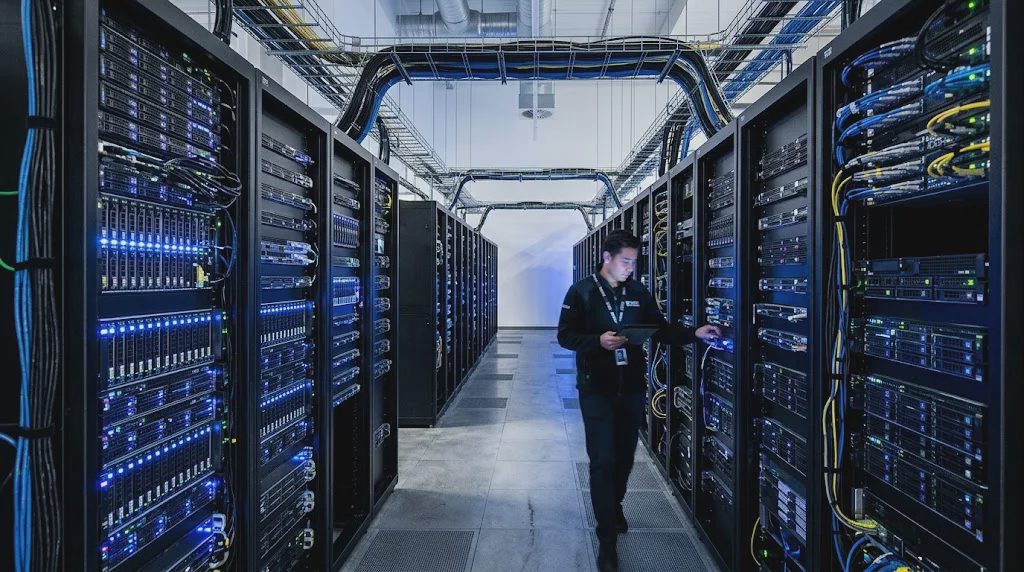
The most concrete technical reference remains the Qwen3.8-Flash-Next model card and associated documentation. Its sparse activation pattern and n-gram lookup layer place different demands on host memory bandwidth and PCIe connectivity compared with conventional dense models. Teams evaluating hardware should treat the verified configurations for Flash-Next as the current baseline rather than extrapolating unconfirmed Qwen 4 figures.
No independent performance numbers or final parameter counts for Qwen 4 have been released. Any specific claims beyond the official statements above remain speculative.
Practical Preparation Steps

Three concrete actions can be taken today that will reduce friction once Qwen 4 arrives.
First, keep serving infrastructure behind an OpenAI-compatible interface. Recent Qwen transitions have required only a model-string change for teams already using this pattern; teams without it faced larger migrations.
Second, test the preview architecture directly. Qwen3.8-Flash-Next is publicly available. Running real workloads against it is currently the only reliable way to observe how the n-gram layer and sparse MoE routing behave on specific data distributions.
Third, review hardware readiness with the Flash-Next requirements in mind, paying particular attention to system memory bandwidth. Official documentation for the preview model provides the verified GPU configurations that serve as the best current reference.
In summary, the only fully confirmed facts are that Qwen 4 is in training and that Qwen3.8-Flash-Next previews its architecture. Everything else remains either stage commentary or community inference. Maintaining interface flexibility and validating the existing preview model offers the most practical path forward. This overview will be updated when official information changes.
For the original official description of the architecture preview, see the Qwen3.8-Flash-Next model documentation on Hugging Face.


No comments yet — be the first to share a thought.