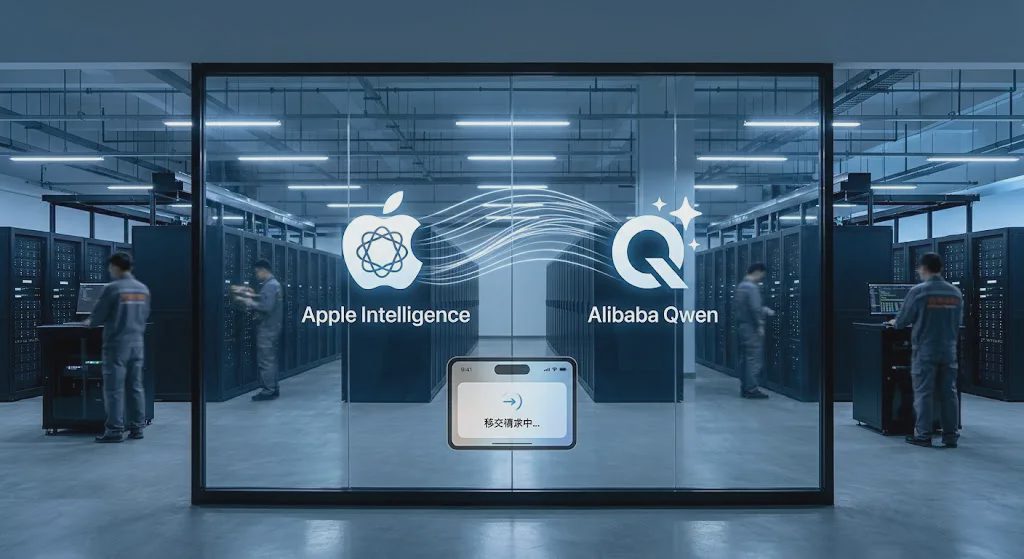
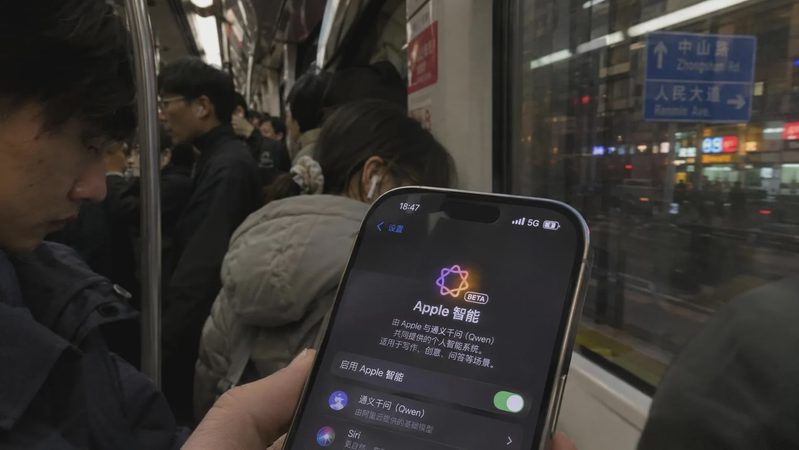
When Apple Intelligence finally reaches mainland China with iOS 27.3, it does not arrive as a simple copy of the global version. The architecture is deliberately split. Apple’s own generative models handle the bulk of on-device work. For a defined set of system-level language, generation, and understanding tasks that require an approved Chinese model, the system can hand requests to Alibaba’s Qwen.
This is not a full replacement of Siri or Apple Intelligence. It is a selective, user-controlled hand-off. Understanding exactly when it triggers, what the user can control, and where the practical limits sit is the difference between treating the feature as marketing and treating it as a real system component.
This piece expands on the overview in Apple Intelligence Finally Reaches China — With Qwen as the Local Partner. It sticks to confirmed statements from Apple and Alibaba and the documented behavior of the first-wave features.
What the Hand-off Actually Is
Apple’s official framing is straightforward. The base generative models powering Apple Intelligence features in China are built by Apple. Separately, Apple is working with Alibaba to add Qwen support inside selected experiences: certain Siri requests, Writing Tools, and Visual Intelligence.
In practice this means the phone stays inside the Apple Intelligence system for most operations. When a request needs broader knowledge, original long-form generation, or document/image understanding that falls under local regulatory requirements, the system can offer to route that specific request to Qwen.
The first confirmed entry points are:
Certain Siri queries, including questions about photos and documents (PDFs, presentations, etc.)
“Compose with Qwen” inside system-wide Writing Tools, which generates original text (and in some cases images) from a prompt rather than only rewriting existing text
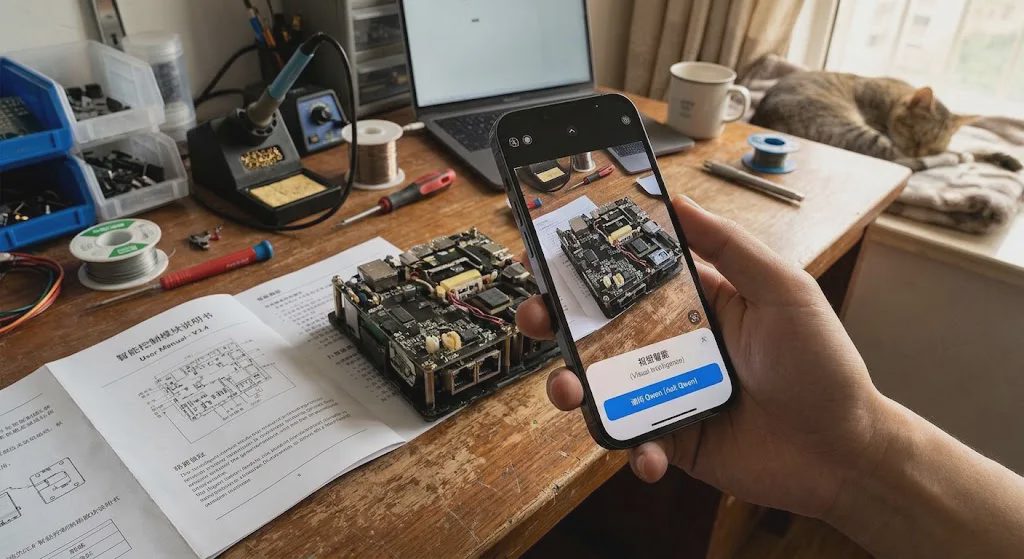
“Ask Qwen” inside Visual Intelligence, allowing the camera or screenshot context to be sent for identification or further information
These are opt-in extensions, not automatic replacements for every Siri interaction or every Writing Tools action.
User Controls: When the Hand-off Happens
The most important confirmed detail is that the user remains in control.
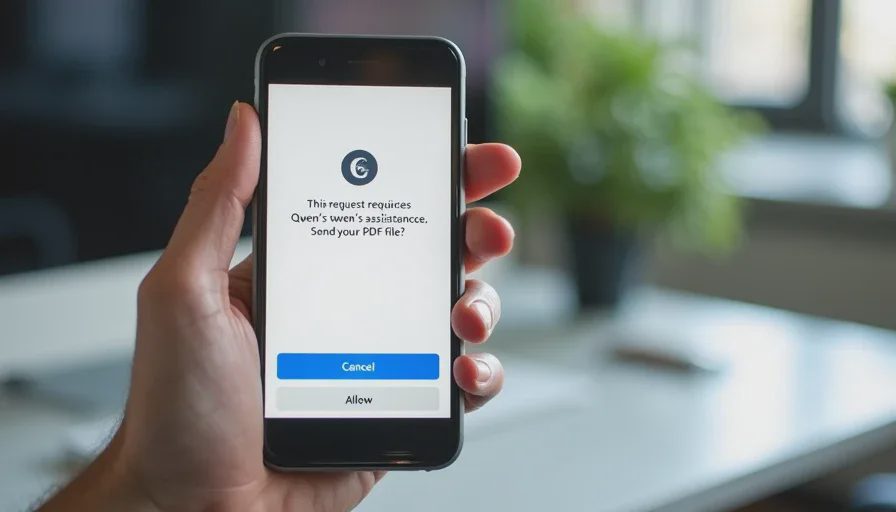
Before a question, document, or image is sent to Qwen, the system asks for permission. Users decide whether to enable the Qwen integration at all, and they decide what information is shared on each request. Access can be granted through a Qwen account or through Sign in with Apple.
This is closer to the way ChatGPT integration works in other regions than to a fully opaque cloud fallback. The hand-off is visible and deliberate. If you never approve a request, the Qwen path is not used.
For practitioners evaluating the system, this control surface is the first thing to test in the developer beta (which opened 4 November 2026). The practical questions are simple:
How clearly is the hand-off indicated in the UI?
Can the user revoke access or clear shared context later?
Does the system fall back gracefully if the user declines?
Until more detailed technical documentation appears, these observable behaviors matter more than architecture diagrams.
Data Flow and Stated Limits
Alibaba has stated that requests and responses generated through the integration will not be used to train its models. Apple has emphasized that users control when the hand-off occurs and what data is shared.
What is not yet public is a complete specification of the exact payload that leaves the device, the retention period on the receiving side, or the precise latency characteristics under different network conditions. The original overview article noted that further technical details on the exact Qwen variants in use and on the latency and privacy boundaries would be updated if they become available. That remains the case.
The practical boundary that is already clear is architectural. Apple’s own models continue to handle the bulk of on-device processing. Qwen is positioned for the subset of tasks that require an approved domestic model under Chinese generative-AI regulations. The result is a split stack rather than a single external dependency.
This is also why the first wave deliberately omits the full Siri AI experience that shipped in other regions. The initial China release focuses on more contained features (Clean Up, Writing Tools, Visual Intelligence, summaries, Live Translation, etc.) where the hand-off points can be clearly scoped.
Practical Limits Practitioners Should Expect
Because the hand-off is selective and user-mediated, several real-world constraints follow directly:
Not every request is eligible. Routine on-device tasks stay local. Only the designated entry points (certain Siri document/photo questions, Compose with Qwen, Ask Qwen) surface the option.
Region and account matter. The feature set is limited to eligible devices whose region and Apple Account are set to China. Changing language alone is not sufficient.
Consent is per-request in the documented flow. Users must approve the sharing of a specific question, document, or image. This is both a privacy control and a potential friction point for fluid multi-step workflows.
Model version transparency is limited. Public statements do not currently name a single fixed Qwen variant that users can select. The system routes to Qwen for the supported experiences; the exact size or snapshot is not exposed as a user-facing choice.
Latency and reliability are still being measured. No official numbers have been published for the hand-off path. Teams testing the developer beta should instrument the difference between pure on-device responses and Qwen-assisted ones under typical Chinese network conditions.
These limits are not defects; they are the direct consequence of meeting local regulatory requirements while keeping Apple’s own models in the primary path.
What This Means for Teams Already Using Qwen
If you already run Qwen models locally or via API, the China integration is useful context rather than a direct product change.
It demonstrates that the same model family used in open-weight and hosted deployments can clear the product-quality and regulatory bars required for deep integration inside a major consumer operating system. That is a stronger signal than leaderboard scores alone.
It also reinforces a practical evaluation pattern: treat the Apple hand-off as one more production surface. Measure the same things you already measure for your own deployments—response quality on document and image tasks, consistency of generation, and behavior under partial context—while adding the extra constraints of user consent and the split-stack routing.
For internal tools or agent systems that may eventually need to interoperate with consumer devices in China, the existence of a controlled, opt-in Qwen path inside Apple Intelligence is worth tracking. It is one of the few places where an open-weight model family sits at system level inside a tightly managed consumer platform.
Clear Takeaways
The Qwen hand-off is selective, user-controlled, and limited to specific experiences (certain Siri requests, Compose with Qwen, Ask Qwen in Visual Intelligence).
Apple’s own models remain the primary on-device engine. Qwen is the approved partner for the subset of tasks that require local regulatory clearance.
Users approve what is shared. Alibaba has stated that those requests and responses are not used for training.
Exact payload details, latency figures, and model variant identifiers are not yet fully public; observable behavior in the beta is currently the best source of truth.
For practitioners, the useful posture is the same one applied to any hybrid system: verify the exact trigger conditions on the target device, measure the tasks that matter to your workload, and separate the marketing description of “Qwen-powered” from the documented support matrix.
The architecture is deliberately constrained. That constraint is what makes the hand-off understandable rather than magical. Test the consent flow, note which requests surface the option, and treat the rest of Apple Intelligence as the Apple-model path it primarily is. Further technical details, if released, will refine the picture; the control surface and the split-stack design are already clear.


No comments yet — be the first to share a thought.