
After two years of regulatory delays, Apple Intelligence is arriving on iPhones in mainland China. The first core features enter open beta for developers on 4 November 2026 and will ship publicly with iOS 27.3 in December.
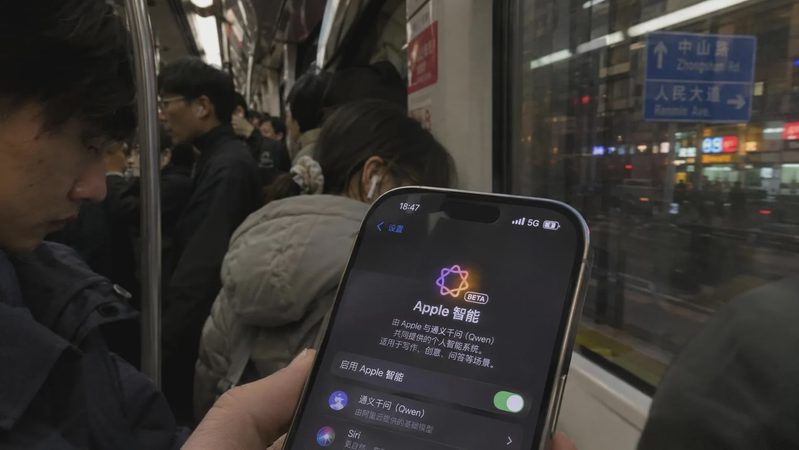
This is the same Apple Intelligence suite that launched in other markets in 2024, but the China version has been rebuilt around local requirements. Apple’s own generative models handle the bulk of the on-device work. For system-level language and generation tasks that need an approved Chinese model, Apple is integrating Alibaba’s Qwen (通义千问).
What ships in the first wave
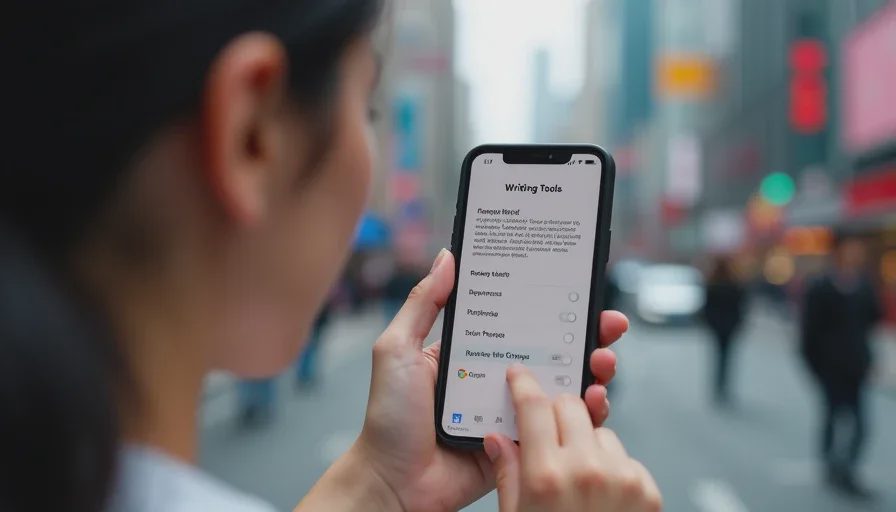
Apple lists roughly 18 features in the initial release. The confirmed set includes:
Photos tools: Clean Up (object removal), memory video creation, and natural-language search
Visual Intelligence via the camera
Smart emoji / Genmoji generation
Writing Tools: proofreading, rewriting, and summarisation
Notification and email summaries
Smart Reply suggestions
Audio transcription and summaries in Notes and Phone calls
Live translation for calls and messages
Notably absent from this first drop is the full Siri AI experience that became available in other regions during 2026. Apple is starting with the more contained, on-device and narrowly scoped features.
How Qwen fits in
Apple’s official statement confirms two things:
The base generative models are built by Apple.
Apple is working with Alibaba to add Qwen support inside Siri (and related experiences such as Writing Tools and Visual Intelligence).
In practice this means Chinese users can opt in to route certain requests — document analysis, photo questions, content generation, “Compose with Qwen,” and “Ask Qwen” in Visual Intelligence — to Qwen. Users control when the hand-off happens and what data is shared. Alibaba has stated that requests and responses will not be used for model training.
This is the first time a Chinese large model has been positioned as a primary system-level partner for a global consumer device maker in the mainland market. For anyone tracking Qwen’s commercial footprint, it is a clear signal that the model family has cleared the necessary regulatory and product-quality bars for deep OS integration.
Why it took two years
Chinese regulations require generative AI services running in the country to use models that have completed local filings. Apple’s own models did not meet that bar on their own, so the company partnered with approved domestic providers. Alibaba’s Qwen became the language and generation backbone; other partners handle specific verticals such as search. The result is a split stack: Apple Intelligence runs on Apple silicon with Apple models where possible, and hands off to Qwen where Chinese regulatory approval is required.
Practical takeaway
For most users the change is straightforward — more AI features on the same hardware, available after the December update (or the November developer beta if you are testing).
For teams already building on Qwen, the integration is more interesting. It demonstrates that the same model family used in open-weight and API deployments can also serve as a production-grade component inside a tightly controlled consumer OS. That is useful context when evaluating Qwen for enterprise or agent workloads that eventually need to interoperate with consumer devices.
The rollout remains limited to eligible devices whose region and Apple Account are set to China. Support for additional platforms (iPad, Mac, Vision Pro) is expected to follow once the corresponding approvals are complete.
This article will be updated if Apple or Alibaba release further technical details on the exact Qwen variants in use or on the latency and privacy boundaries of the hand-off.


No comments yet — be the first to share a thought.